
Prompt-Led Hospitality: Why Review Responses Matter More Than Ever
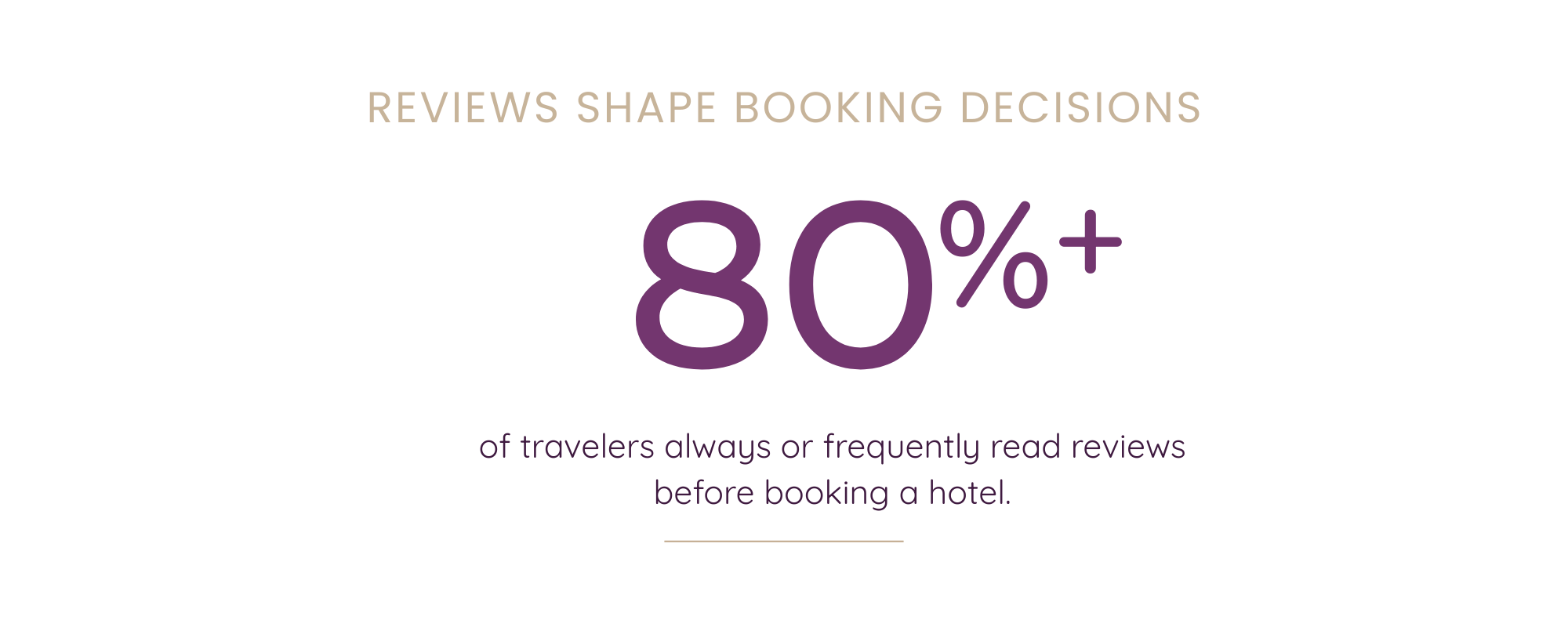
In today’s hospitality landscape, reviews don’t just reflect guest experiences — they shape them. With more than 80% of travelers regularly reading reviews before booking, how a hotel responds is just as influential as the review itself. Prompt-led hospitality transforms review responses into moments of care, clarity, and trust — extending the guest journey long after checkout.
Prompt-Based Communication vs Scripts and Automation: What’s the Difference?
Scripts break the moment a guest says something unexpected. Prompt-led hospitality scales because it protects tone, timing, and judgment—without forcing teams to sound robotic. This post explains why prompts outperform scripts and how to build communication that stays consistent under pressure.

Why Scripts Fail and Prompts Scale in Hospitality
Scripts promise consistency, but hospitality depends on judgment.
In real guest interactions, rigid scripts often collapse under nuance — forcing teams to choose between sounding human and following instructions. Prompts work differently. They support thinking, adapt to context, and scale emotional intelligence without flattening personality.
This article explores why scripts fail in modern hospitality — and how prompt-led systems help teams deliver consistent, confident service without losing the human touch.
Service Is a Feeling
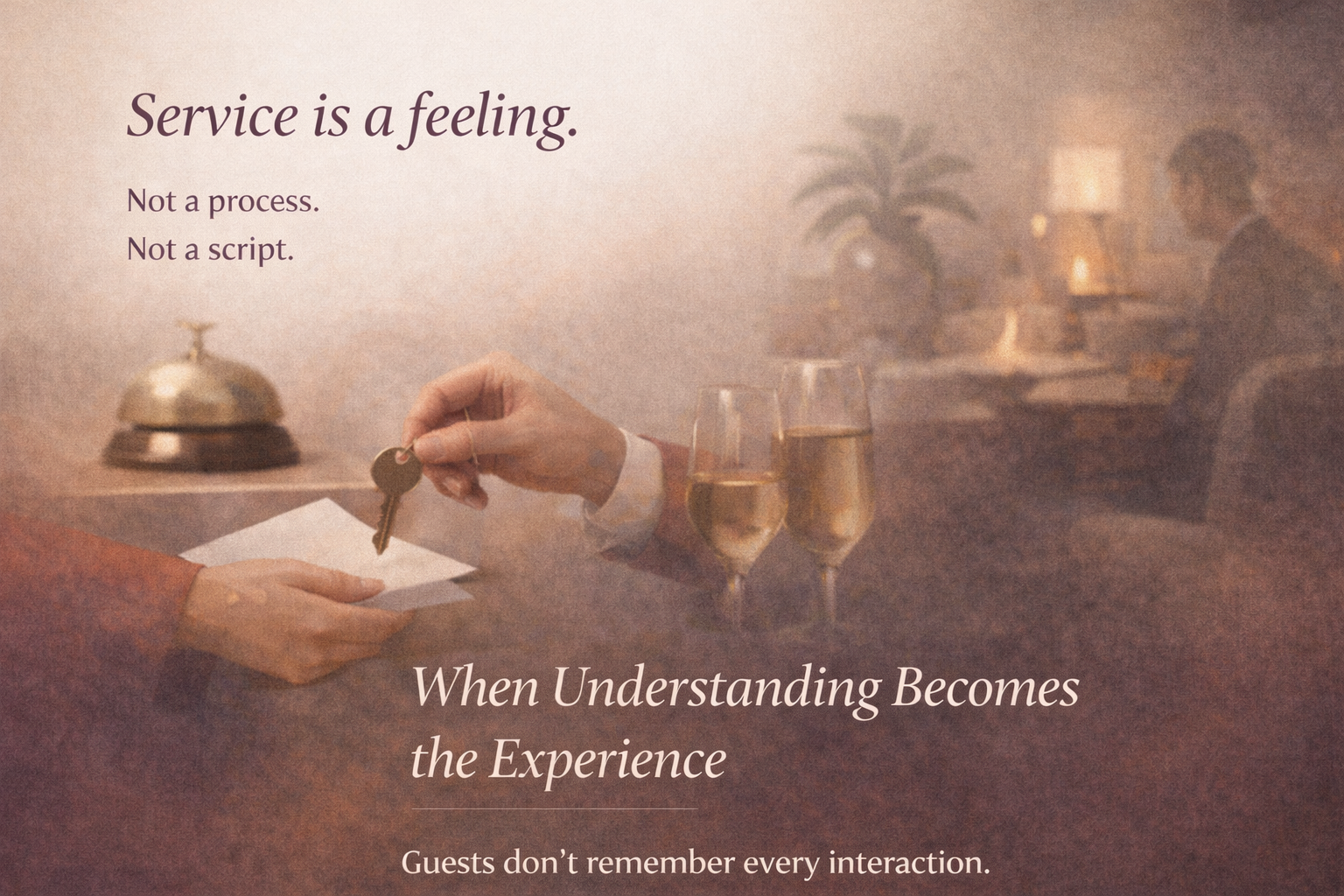
Service is not a process or a script - it’s a feeling. When guests feel understood and heard, value shifts, trust deepens, and premium experiences begin to make sense.
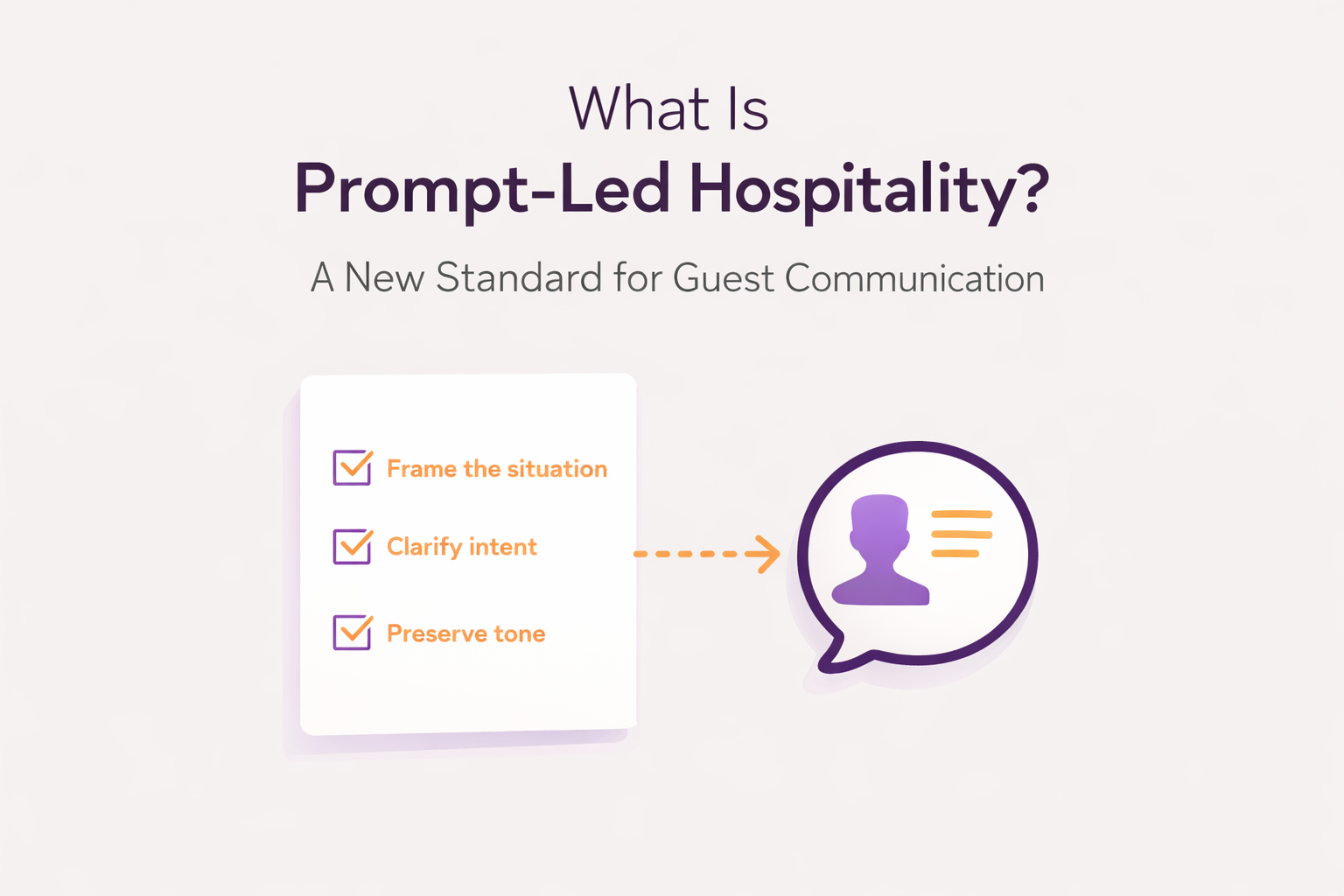
What Is Prompt-Led Hospitality? A New Standard for Guest Communication
Prompt-led hospitality reframes guest communication as a system—not instinct. This article explains how prompt-based communication replaces scripts and automation with structured judgment, helping teams respond with clarity, timing, and human intent.

Why Prompting Matters More Than Ever
Why prompting matters more than ever in hospitality—and how intentional written communication helps teams respond with clarity, care, and confidence.

The Cost of Getting the Words Wrong in Hospitality.
Explore the hidden cost of getting the words wrong in hospitality—and why written communication shapes trust, service recovery, and guest experience.

How Hospitality Teams Build A Consistent Voice - Without Scripts
Learn how hospitality teams build a consistent voice without scripts—and why preparation, not control, creates clearer guest communication.